



You go to bed on time, get what should be enough sleep and wake up expecting to feel rested. Instead, you feel heavy, drained and reluctant to start the day.
If this sounds familiar, you may wonder why eight hours of sleep are not making a difference.
The answer is not always about how long you sleep. Stress, anxiety, depression and disrupted sleep can affect how rested you feel. Physical health conditions and certain medications can also contribute to persistent tiredness.
Why am I tired even after sleeping for eight hours?
Spending eight hours in bed does not necessarily mean you have had restorative sleep. You may wake up several times without remembering it, experience disrupted sleep or have difficulty reaching and maintaining the sleep your body needs.
There is also a difference between sleepiness and fatigue. Sleepiness is the feeling that you could fall asleep, while fatigue often feels like a lack of physical or mental energy, even after resting.
If you regularly wake up exhausted, it is worth looking beyond your sleep schedule.
What mental health conditions can contribute to waking up exhausted?
Several psychological and emotional experiences can affect sleep and energy. These are possible contributors, not a checklist for diagnosing a mental health condition.
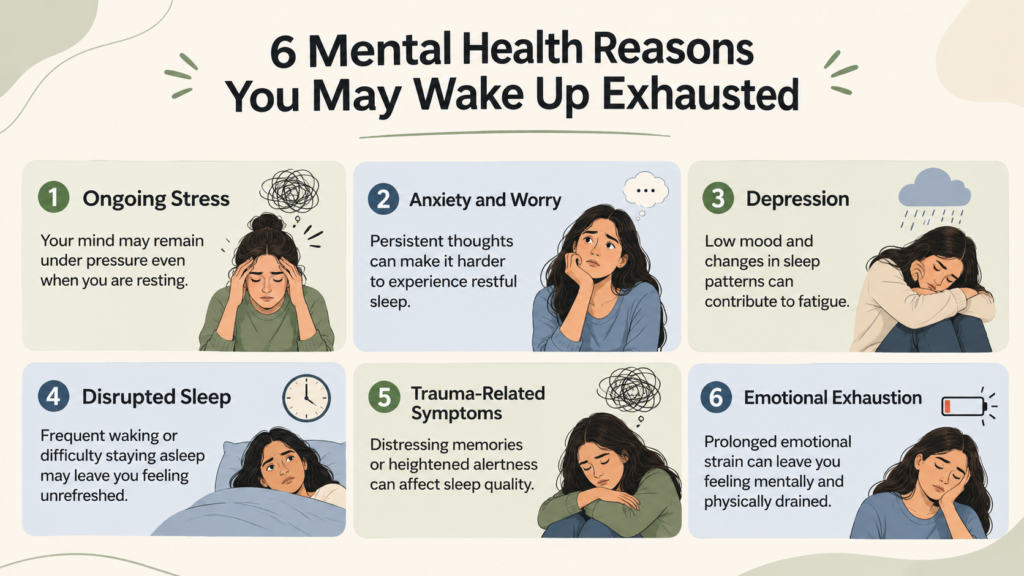
1. Ongoing stress
When you are dealing with work pressure, family responsibilities or financial uncertainty, your mind may remain occupied even after the day ends. Prolonged stress can make it difficult to relax, affect sleep and leave you feeling mentally drained in the morning.
2. Anxiety and persistent worry
Anxiety can keep your mind alert when you are trying to rest. You may replay conversations, anticipate problems or worry about things that have not happened. Physical tension and repeated waking can also affect sleep quality.
3. Depression
Depression does not always appear as visible sadness. For some people, it involves persistent tiredness, low motivation, reduced interest in activities and difficulty concentrating.
Sleep patterns may also change. Some people struggle to fall asleep or wake too early, while others sleep longer than usual and still feel exhausted.
4. Insomnia or disrupted sleep
Insomnia can make it difficult to fall asleep, stay asleep or return to sleep after waking. Even when you spend enough time in bed, repeated interruptions can leave you feeling unrefreshed.
Sometimes, worrying about not sleeping well can make the problem worse.
5. Trauma related symptoms
People who have experienced distressing or traumatic events may have nightmares, heightened alertness or difficulty feeling safe enough to relax. These experiences can interrupt sleep and contribute to daytime exhaustion.
Not everyone who experiences trauma develops ongoing sleep difficulties, but persistent symptoms deserve attention.
6. Emotional exhaustion
Prolonged emotional strain, such as caregiving responsibilities, relationship difficulties or ongoing personal challenges, can leave you feeling mentally depleted.
You might notice that ordinary tasks require more effort, you feel easily overwhelmed or you have little energy left for activities you once enjoyed. Emotional exhaustion is not a diagnosis by itself, but it can be a reason to examine what you are dealing with.
Can depression make you tired even after a full night’s sleep?
Yes. Fatigue and low energy are recognised symptoms of depression. Some people describe it as waking up already tired, struggling to get started or feeling as though even simple tasks require considerable effort.
Depression can also affect sleep, appetite, concentration and interest in everyday activities.
However, tiredness alone does not mean you have depression. A mental health professional considers the wider pattern of symptoms, how long they have lasted and how they affect daily life.
How can anxiety affect sleep quality?
Anxiety can make it difficult for your body and mind to settle down at night. Even when you fall asleep, tension and repeated waking may leave you feeling less rested.
You might wake up thinking about unfinished tasks, feel tense before the day begins or struggle to switch off at bedtime.
Could something other than mental health be causing the fatigue?
Yes. Persistent tiredness can have several physical causes, including:
- Sleep apnoea: Breathing repeatedly stops and starts during sleep. Loud snoring, gasping and daytime tiredness can be warning signs.
- Anaemia: Low iron levels can contribute to fatigue, weakness and breathlessness.
- Thyroid problems: Changes in thyroid function can affect energy levels.
- Medication effects: Some medicines can cause drowsiness or affect sleep.
This is why persistent fatigue should not automatically be attributed to stress or depression. A medical assessment can help identify the underlying cause.
What can help when you wake up exhausted every day?
Start by observing your sleep and energy patterns rather than immediately changing everything.
- Maintain reasonably consistent sleeping and waking times.
- Make your bedroom comfortable, quiet and suitable for rest.
- Notice whether caffeine, late night screen use or irregular routines affect your sleep.
- Record your energy levels, mood and sleep interruptions for a couple of weeks.
- Make room for manageable physical activity and regular meals.
These steps may support better sleep, but they cannot replace medical evaluation when fatigue continues.
When should you seek professional help?
Consider speaking to a healthcare professional if tiredness lasts for several weeks, affects your work or daily responsibilities, or occurs alongside changes in mood, appetite or sleep.
A doctor may review your symptoms, medications and medical history and recommend tests where appropriate. If emotional or psychological factors are contributing, a mental health assessment may also help clarify what support is suitable.
HappyMindz Clinic in Rohini, Delhi, provides psychiatric care for concerns involving mood, anxiety, sleep and emotional wellbeing.
Frequently asked questions
Why am I tired after eight hours of sleep?
Sleep quality, stress, anxiety, depression, sleep disorders and physical health conditions can all contribute to tiredness despite spending enough time in bed.
Can depression cause morning fatigue?
Yes. Depression can involve low energy, fatigue and changes in sleep, including waking early or sleeping longer than usual.
Can anxiety make sleep feel unrefreshing?
Yes. Persistent worry, physical tension and nighttime alertness can interfere with restful sleep.
Should I see a doctor if I wake up exhausted every day?
Yes, particularly if the problem continues for several weeks or affects daily life. A medical assessment can help identify possible physical or psychological causes.
Can medication affect sleep and energy?
Yes. Some medicines can cause drowsiness, fatigue or changes in sleep. Speak with your prescribing doctor before changing or stopping any medication.
Closing Thoughts
Personal growth is not about changing who you are. It is about recognising the patterns that no longer serve you and making more intentional choices. Small, consistent changes in how you think, respond and act can create meaningful progress over time.
HappyMindz Clinic, located in Rohini, Delhi, provides psychiatric care and support for mental health concerns. Dr. Neha Salhotra, Psychiatrist, focuses on understanding individual experiences and guiding people towards appropriate mental health care.
Medical note: This article is for general educational purposes and does not replace professional medical advice, diagnosis or treatment.


