
Booking your first appointment with a psychiatrist can feel intimidating. You might be wondering what to say, whether you will receive a diagnosis or if you will be prescribed medication immediately.
Perhaps you have been struggling with anxiety, low mood, sleep problems or thoughts that feel difficult to manage. You may have spent weeks wondering whether what you are experiencing is serious enough to seek help.
A first psychiatric consultation is an opportunity to talk about these concerns, understand what might be happening and explore suitable next steps. You do not need to arrive with a diagnosis or have all the answers. It is okay if you are nervous or unsure where to begin.
What questions will a psychiatrist ask?
During your first appointment, a psychiatrist will usually ask about your current concerns, how long you have been experiencing them and how they affect your everyday life.
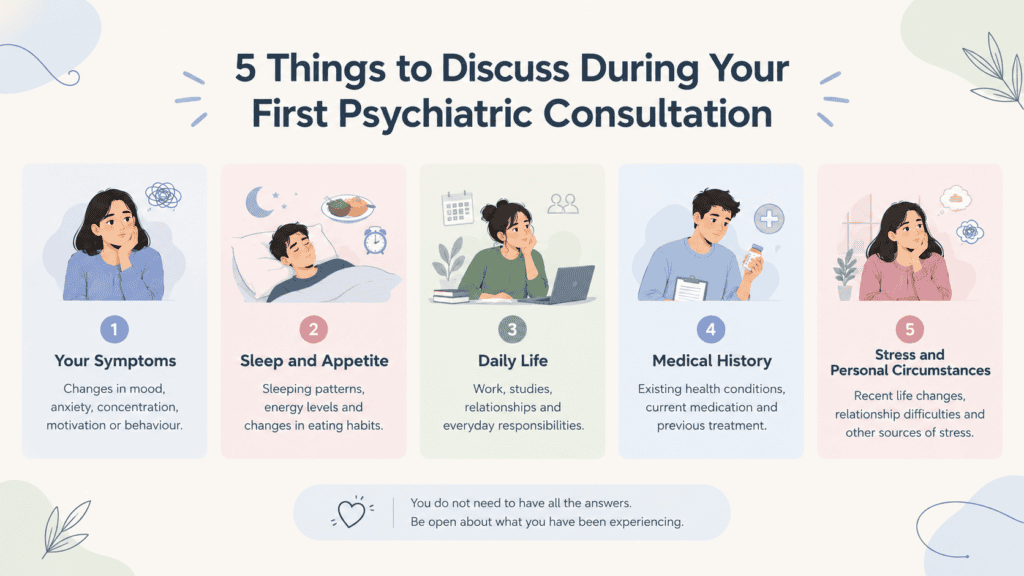
Depending on your situation, the conversation may cover:
- Your symptoms: Changes in mood, anxiety, concentration, motivation or behaviour.
- Sleep and appetite: Whether you have noticed changes in your sleeping patterns, energy levels or eating habits.
- Daily life: How you are managing work, studies, relationships and everyday responsibilities.
- Medical history: Existing health conditions, current medication and previous mental health treatment.
- Stress and personal circumstances: Recent life changes, relationship difficulties or other experiences that may be affecting you.
You may also be asked about your family history or whether you have experienced similar difficulties before.
These questions are not a test, and there are no perfect answers. The purpose is to understand your experience in context rather than judge you for what you share.
Do you need to prepare before your first appointment?
You do not need to prepare extensively. However, if you find it difficult to explain what you have been going through, making a few notes beforehand can help.
Consider writing down when your symptoms started, what makes them better or worse, how they affect your routine and any questions you would like to ask.
If you have previous medical records, prescriptions or details of medication you currently take, bring them along if possible.
And if you forget something during the conversation, do not worry. You can always mention it later or discuss it during a follow up appointment.
Will a psychiatrist diagnose you during the first session?
Sometimes, an initial consultation provides enough information for a psychiatrist to identify a likely condition. In other situations, further assessment or another appointment may be needed.
Mental health concerns can overlap. For example, difficulty concentrating may be associated with anxiety, sleep problems, depression or other conditions. Understanding the underlying reasons takes more than looking at one symptom in isolation.
A responsible assessment considers your symptoms, their duration, your medical history and their impact on your life. You should have an opportunity to ask questions and understand the conclusions reached.
Will you be prescribed medication immediately?
Not necessarily. A psychiatric consultation does not automatically mean you will be prescribed medication.
Treatment depends on the nature of your difficulties, their severity, your preferences and the options considered appropriate by the psychiatrist.
Depending on your needs, recommendations may include psychological therapy, lifestyle changes, further assessment, medication or a combination of approaches.
If medication is recommended, you can ask why it may help, what benefits to expect, what side effects are possible and whether other options are available. Treatment decisions should involve a discussion between you and your clinician.
Can you talk privately to a psychiatrist?
Yes. Confidentiality is an important part of psychiatric care. It helps create a space where you can discuss personal concerns openly without feeling that you need to hide what you are experiencing.
However, confidentiality has limits in certain circumstances, such as serious safety concerns or situations where disclosure is required by law. Your psychiatrist can explain the relevant limits and how your information is handled.
You can also say if a question makes you uncomfortable. You are allowed to ask why certain information is needed.
How long does a psychiatric consultation take?
The duration varies depending on the clinician, the appointment format and the complexity of your concerns. An initial assessment may take longer than a follow up visit because it involves understanding your history and discussing possible next steps.
When booking a consultation in Delhi or elsewhere, check the expected appointment duration with the provider so you can plan your time comfortably.
Frequently asked questions
What should I tell a psychiatrist during my first visit?
Start with whatever is troubling you most. Explain what you have noticed, how long it has been happening and how it affects your daily life. You do not need to describe everything perfectly.
Can you visit a psychiatrist without a referral?
In many cases, you can book directly with a psychiatrist without a referral. However, requirements may vary depending on the healthcare provider or your circumstances.
Should you bring previous medical records?
Yes, if they are available. Previous prescriptions, medical reports and details of past treatment can help the psychiatrist understand your history.
Can you choose between an online and in person psychiatric consultation?
Yes. Online consultations offer convenience, while in person appointments allow face to face interaction. The right option depends on your needs and preference.
What if you feel nervous about your first appointment?
Feeling nervous is common. You can tell the psychiatrist that you are anxious about the consultation itself. You can also bring written notes to help you express your concerns.
What happens after the first consultation?
Your psychiatrist may discuss an initial understanding of your concerns, recommend treatment or further assessment, and suggest a follow up appointment depending on your needs.
Taking the first step
Seeking mental health support does not mean you have failed to manage things on your own. Sometimes, it simply means you are ready to understand what you have been experiencing and find a way forward.
A psychiatric consultation is a conversation about your concerns, your circumstances and the support that may help. You do not need to wait until everything feels overwhelming to ask for help.
HappyMindz Clinic provides mental health services in Rohini, Delhi, including psychiatric consultations. The appropriate type of support depends on each person’s individual concerns and assessment. Dr. Neha Salhotra, Psychiatrist, is associated with the clinic and works in the field of mental health assessment and care.