
Adolescence can be confusing for teenagers and their parents. One day, your child may be talkative and cheerful; the next, they may want to spend hours alone in their room. Mood changes, disagreements and a growing need for independence are often part of growing up. But what if your teenager seems different for weeks, stops enjoying things they once loved, or struggles to manage everyday life?
It can be difficult to know whether these changes are part of adolescence or signs of something more serious.
A teenager may need professional mental health support when emotional or behavioural changes persist, worsen, or begin affecting school, relationships, sleep or daily activities. You do not need to wait for a crisis before asking for help.
What mental health changes should parents take seriously?
There is no single sign that tells you a teenager needs a psychiatric assessment. Instead, pay attention to changes from their usual behaviour, especially when several occur together.
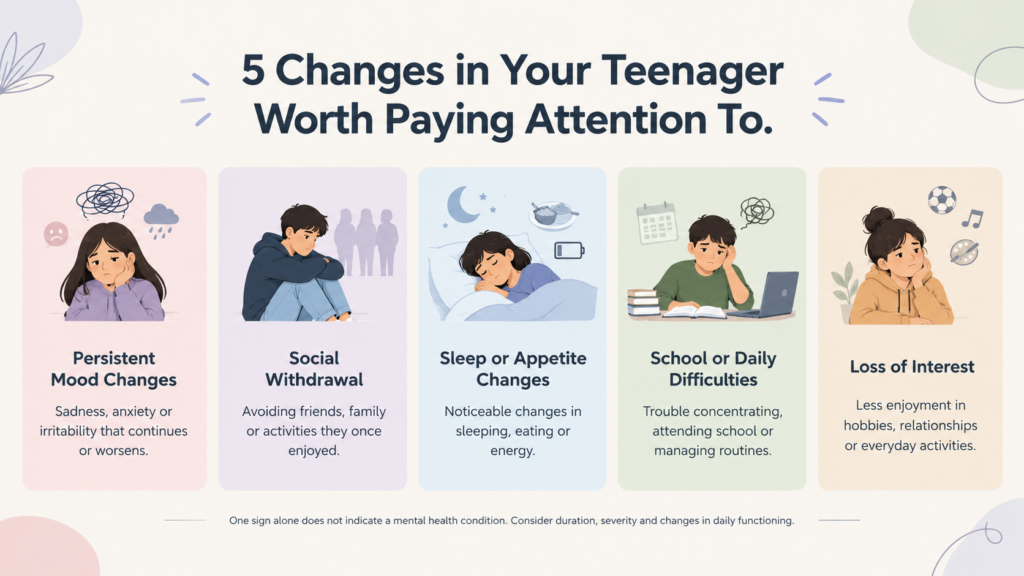
These may include:
- Persistent sadness, anxiety, irritability or frequent emotional outbursts.
- Withdrawing from family, friends or activities they previously enjoyed.
- Noticeable changes in sleep, appetite or energy levels.
- Falling school performance, difficulty concentrating or frequent absences.
- Losing interest in hobbies, socialising or everyday routines.
- Increasingly risky behaviour, substance use or difficulty managing emotions.
One difficult week does not necessarily indicate a mental health condition. However, if these changes continue, become more intense or interfere with everyday life, it is worth exploring what may be happening.
When is teenage moodiness normal?
Teenagers are navigating physical development, academic pressure, friendships, identity and increasing independence. Occasional frustration, wanting privacy or disagreeing with parents can be a normal part of this stage.
The important distinction is not simply whether your teenager is moody. Consider how long the change has lasted, how intense it is, what might be contributing to it, and whether your teenager can still manage daily life.
For example, being upset after an argument is different from feeling persistently hopeless, avoiding friends for weeks or struggling to attend school.
Rather than focusing on one behaviour, look at the overall pattern. If your teenager seems persistently distressed or their usual personality and routines have changed significantly, a conversation with a qualified mental health professional may help.
What signs suggest a teenager may need professional help?
Consider seeking professional support if your teenager:
- Seems emotionally overwhelmed most days or finds it difficult to recover after stressful situations.
- Regularly avoids school, social activities or responsibilities because of emotional distress.
- Has ongoing difficulties with friendships, family relationships or everyday routines.
- Experiences anxiety or low mood that is not improving.
- Shows concerning changes in behaviour, including substance use or repeated risk-taking.
- Says they feel worthless, hopeless, trapped or unable to cope.
You do not need to identify the cause yourself. A mental health professional can help assess whether these changes are related to stress, a mental health condition, a physical health concern or several factors together.
How can anxiety or depression appear in teenagers?
Teenage anxiety does not always look like visible fear. Some teenagers repeatedly worry about school, friendships or disappointing others. Others avoid situations that make them uncomfortable, seek constant reassurance or experience headaches and stomach aches during stressful periods.
Depression can also look different from what parents expect. A teenager may not appear visibly sad. Instead, they might become unusually irritable, lose interest in activities, withdraw from friends, struggle with sleep or seem exhausted and unmotivated.
These signs do not automatically mean a teenager has anxiety or depression. Similar difficulties can have other explanations, which is why a proper assessment matters.
When should a teenager see a psychiatrist rather than wait?
A psychiatrist is a medical doctor who specialises in assessing and treating mental health conditions. An appointment may be appropriate when symptoms are persistent, worsening, significantly affecting daily functioning, or causing concern about safety.
A psychiatrist can assess possible mental health conditions, consider relevant physical or developmental factors, and discuss treatment options. Depending on the teenager’s needs, support may also involve a psychologist, counsellor, family or school.
If you are unsure where to start, you can begin by discussing your concerns with a qualified healthcare professional. You do not need to be certain that something is wrong before seeking advice.
What happens during an adolescent psychiatric assessment?
An initial assessment usually involves understanding what has changed and how your teenager has been feeling. The clinician may ask about mood, sleep, appetite, concentration, relationships, school experiences, developmental history and any safety concerns.
Parents or caregivers may be asked to share what they have observed. The teenager should also have an opportunity to express their own perspective and ask questions.
Privacy is important, particularly for adolescents. The clinician should explain what can remain confidential and when information may need to be shared to protect the teenager or others, in line with applicable law and safety requirements.
The purpose is not to label or blame your child. It is to understand their difficulties and identify appropriate support.
What treatments may be recommended?
Treatment depends on the teenager’s needs, symptoms and circumstances. Options may include:
- Psychological therapy: To develop coping skills and work through emotional difficulties.
- Family support: To improve communication and help family members respond constructively.
- School-based support: To address academic pressure, attendance or learning-related concerns.
- Medication: When clinically indicated following an appropriate assessment.
- Follow-up care: To review progress and adjust the plan if needed.
Not every teenager needs medication, and no single approach suits everyone. Treatment decisions should be made with a qualified professional and, where appropriate, the teenager and their caregivers.
What should parents do if their teenager talks about self-harm?
Take any mention of self-harm or suicide seriously, even if you are unsure whether your teenager intends to act. Listen calmly, avoid judgement, and let them know you are glad they told you.
Ask directly about their immediate safety when appropriate. If there is immediate danger, stay with them, reduce access to things they could use to hurt themselves if you can do so safely, and seek emergency assistance. In India, call 112 for emergency help.
Do not wait for a routine appointment if your teenager may be at immediate risk. Urgent professional assessment is important.
Frequently Asked Questions
How do I know if my teenager needs a psychiatrist?
Consider an assessment if emotional or behavioural changes persist, worsen or interfere with school, relationships, sleep or daily life. Safety concerns require more immediate attention.
Can teenage mood swings be a sign of depression?
They can be, particularly when irritability occurs alongside persistent low mood, loss of interest, sleep changes or withdrawal. Mood swings alone do not establish a diagnosis.
Should parents attend a teenager’s psychiatric appointment?
Parents may provide useful background information and support. Depending on the teenager’s age, needs and circumstances, the clinician may also speak with them privately.
Can teenagers receive mental health treatment without stigma?
Yes. Mental health difficulties are not a personal failure or a parenting failure. Seeking appropriate support is a constructive step towards wellbeing.
When is teenage mental health support urgent?
Immediate help is needed if a teenager may harm themselves or someone else, has made a suicide attempt, or cannot remain safe. Seek emergency assistance rather than waiting for a scheduled appointment.
Supporting Your Teenager’s Mental Health
Teenagers may struggle to express what they are feeling, making changes in behaviour important to notice.
Listening without judgement and seeking professional guidance when needed can help you understand what your teenager is going through and find the right support.
HappyMindz Clinic, located in Rohini, Delhi, provides mental health services for individuals seeking support with emotional and psychological concerns. Dr. Neha Salhotra, a psychiatrist, offers assessment and guidance based on each person’s needs, helping families explore appropriate mental health care for their teenagers.