
Some days, you feel exhausted because you have too much on your plate. Work is demanding, responsibilities keep piling up, and you barely have time to yourself. You assume things will feel better once the pressure eases.
But what if the pressure does ease, and you still feel low? What if the things you once enjoyed no longer interest you, or even simple tasks start to feel overwhelming?
It can be difficult to tell whether you are dealing with stress, depression or a combination of both. Understanding the difference between depression and stress can help you recognise when you may need additional support. However, symptoms alone cannot establish a diagnosis.
What Is the Difference Between Stress and Depression?
What Does Stress Usually Feel Like?
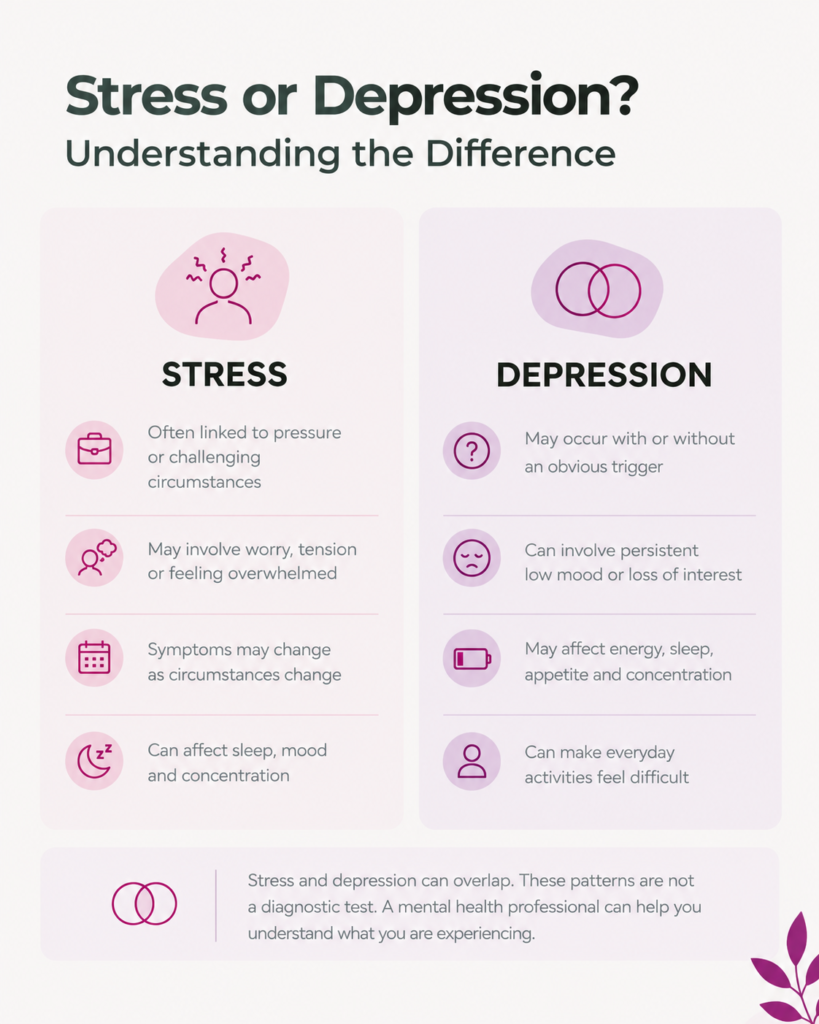
Stress often feels like having too much to manage and too little time or energy to manage it. You might notice:
- Constantly thinking about deadlines, responsibilities or problems.
- Feeling tense, irritable, overwhelmed or mentally exhausted.
- Difficulty concentrating or sleeping.
- Changes in appetite or mood during demanding periods.
You may still enjoy spending time with friends, pursuing hobbies or doing things you care about, even if you struggle to make time for them.
Stress may ease when a difficult situation improves, although its effects can continue afterwards. Persistent stress that interferes with daily life deserves attention, even if you can identify its cause.
What Are the Signs of Depression?
Depression can affect more than your mood. It may change how you think, feel, behave and experience everyday life.
Common signs include:
- Persistent sadness, emptiness or low mood.
- Losing interest in activities or relationships you previously enjoyed.
- Feeling unusually tired or lacking energy.
- Sleeping much more or less than usual.
- Changes in appetite or weight.
- Difficulty concentrating or making decisions.
- Feelings of hopelessness, worthlessness or excessive guilt.
- Struggling with everyday responsibilities.
Not everyone with depression feels sad all the time. Some people primarily notice emotional numbness, irritability, exhaustion or a loss of interest in life.
When these symptoms persist, often for at least two weeks, and affect your functioning, a professional assessment can help determine what is happening.
Depression vs Stress: What Is the Difference?
| Typical pattern | Stress | Depression |
| Common context | Often linked to specific pressures | May occur with or without an obvious trigger |
| Emotional experience | Worry, tension or overwhelm | Persistent low mood and/or loss of interest |
| Response to circumstances | May improve as pressure eases | May continue even when circumstances improve |
| Daily functioning | Can vary with the situation | May be significantly affected |
| Clinical interpretation | Depends on severity and impact | Requires assessment of the overall symptom pattern |
These are typical patterns, not fixed rules. Stress can persist after a problem ends, and depression can be triggered or worsened by difficult circumstances. The table is not a diagnostic test.
Can Stress Turn Into Depression?
Prolonged stress can contribute to emotional exhaustion and may increase the risk of depression in some people. Ongoing financial difficulties, workplace pressure, caregiving responsibilities, relationship problems or major life changes can all affect mental wellbeing.
Individual vulnerability, previous mental health difficulties, physical health and available social support may also play a role.
However, experiencing stress does not mean you will inevitably develop depression. If your low mood persists, you lose interest in things you usually enjoy or daily life becomes increasingly difficult, consider speaking with a mental health professional rather than waiting for circumstances to change.
How Is Depression Diagnosed?
A psychiatrist or another qualified mental health professional may ask about your mood, sleep, appetite, energy, concentration, symptom duration and the effect on your everyday life.
They may also explore recent stressors, medical history, medications and other possible explanations for your symptoms. This broader assessment helps distinguish depression from stress-related difficulties and other mental or physical health conditions.
Seeking an assessment does not mean you have already been diagnosed with depression. It is a way to understand your experience and identify appropriate support.
What Treatments Are Available for Depression?
Treatment depends on the nature and severity of your symptoms and your individual needs. Options may include:
- Psychological therapy: Approaches such as cognitive behavioural therapy (CBT) can help people address unhelpful thinking patterns and develop coping strategies.
- Medication: Antidepressants may be recommended when clinically appropriate, following a discussion of potential benefits, risks and side effects.
- Lifestyle and social support: Regular sleep, physical activity, manageable routines and supportive relationships can complement professional treatment.
Stress-related difficulties may also benefit from practical changes, emotional support and psychological therapy. The right approach depends on what you are experiencing.
When Should You Speak to a Psychiatrist?
Consider professional support if low mood, exhaustion or loss of interest persists, symptoms worsen, or you find it increasingly difficult to manage work, studies, relationships or everyday activities.
You do not need to wait until you reach a breaking point to ask for help.
If you have thoughts of suicide or self-harm, seek urgent support. In India, you can call 112 for emergency assistance or Tele-MANAS at 14416 for mental health support.
Frequently Asked Questions
Can stress cause depression?
Prolonged stress can contribute to depression in some people, but not everyone who experiences stress develops the condition.
Can you be depressed without feeling sad?
Yes. Depression can involve emotional numbness, irritability, low energy or loss of interest rather than obvious sadness.
How long does stress-related low mood last?
There is no fixed timeline. It depends on the circumstances and individual factors. Persistent or worsening low mood deserves professional attention.
Should I see a psychiatrist for stress or depression?
Consider an assessment if symptoms are persistent, difficult to manage or affecting daily life. A psychiatrist can help evaluate possible causes and discuss appropriate treatment.
Understand What You Are Experiencing
Emotional well-being can be influenced by many factors, and understanding changes in mood, motivation and everyday experiences is not always straightforward.
HappyMindz Clinic is a mental health clinic in Rohini, Delhi. Dr. Neha Salhotra is a psychiatrist whose work focuses on mental health and emotional well-being.
Note:This article is for educational purposes only and does not replace professional medical advice, diagnosis or treatment.