
Anxiety does not always require medication. For some people, psychological therapy, particularly cognitive behavioural therapy (CBT), can be an effective treatment on its own. It helps people understand their anxiety, recognise unhelpful thought patterns and gradually change behaviours that keep the anxiety going.
However, therapy alone is not suitable for everyone. The right approach depends on the type of anxiety, how much it affects everyday life, previous treatment and individual preferences.
Can anxiety improve without medication?
Yes. Some people with anxiety disorders improve through psychological treatment without taking psychiatric medication.
For people experiencing occasional or mild anxiety, understanding triggers, making lifestyle adjustments and learning practical coping strategies may help. When anxiety becomes persistent, causes significant distress or interferes with work, relationships or daily activities, structured treatment may be needed.
CBT is one established psychological treatment for anxiety disorders. Medication is another option and may be recommended depending on individual circumstances. Neither approach should be considered a universal solution.
The National Institute for Health and Care Excellence (NICE) recommends considering symptom severity, functional impairment and personal preference when choosing treatment for generalised anxiety disorder.
What is CBT for anxiety?
Cognitive behavioural therapy, commonly called CBT, is a structured form of psychotherapy that explores the connection between thoughts, feelings and behaviour.
Anxiety can create a cycle. You might worry that something will go wrong, feel physically tense and avoid the situation that makes you uncomfortable. Avoidance may bring temporary relief, but it can also reinforce the belief that the situation is dangerous.
CBT helps you recognise this cycle and respond differently.
It does not ask you to ignore your worries or simply think positively. Instead, it teaches practical ways to examine anxious thoughts, manage emotional responses and approach difficult situations more confidently.
What actually happens during CBT sessions?
CBT is not simply talking about problems. Sessions usually involve discussion, practical exercises and setting goals.
Depending on your concerns, treatment may include:
1. Identifying thought patterns
You learn to recognise recurring thoughts, such as expecting the worst, assuming something bad will happen or constantly seeking reassurance.
2. Understanding behavioural patterns
A therapist helps you notice behaviours that maintain anxiety, including avoiding situations, repeatedly checking things or seeking reassurance.
3. Learning practical strategies
You may practise questioning anxious predictions, problem solving, relaxation techniques and managing uncertainty.
4. Gradual exposure
When avoidance is part of the problem, you may gradually approach feared situations in a planned and manageable way. This is done at an appropriate pace rather than through sudden pressure.
5. Practising between sessions
You may be asked to keep a thought record, try a new response to a difficult situation or practise a skill during the week. This helps bring what you learn into everyday life.
How does CBT help with overthinking, worry and avoidance?
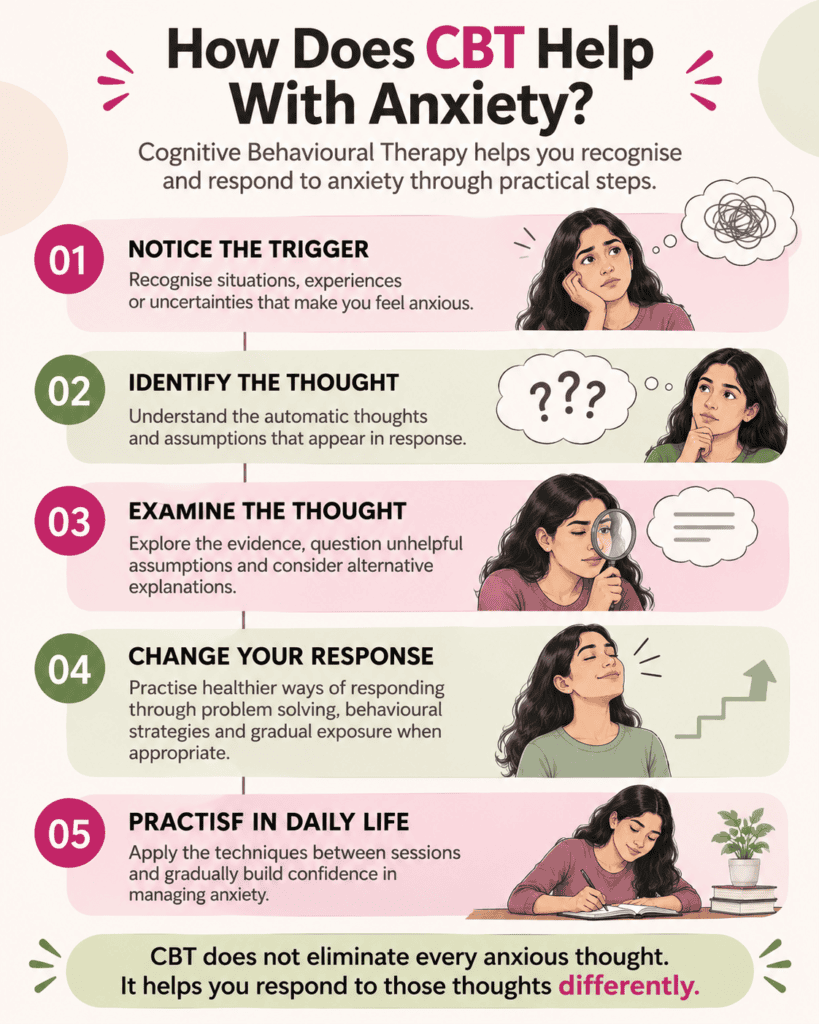
Overthinking often involves repeatedly analysing situations without reaching a useful conclusion. CBT helps identify the assumptions and fears behind these thought patterns.
For example, someone who worries constantly about making mistakes at work might assume that one error will lead to serious consequences. CBT can help them examine the evidence, consider alternative explanations and respond more realistically.
Similarly, someone who avoids social situations because they fear being judged may gradually practise entering those situations and managing the discomfort.
The goal is not to eliminate every anxious thought. It is to reduce how much those thoughts control everyday decisions.
CBT versus medication for anxiety: What is the difference?
Both therapy and medication can help manage anxiety, but they work differently.
| Aspect | CBT | Medication |
|---|---|---|
| Approach | Works with thoughts, emotions and behaviours | Uses prescribed medicines to help manage symptoms |
| Potential benefits | Builds practical coping skills and addresses anxiety patterns | Can reduce symptoms and make daily functioning easier |
| Limitations | Requires regular participation and practice | May cause side effects and may require monitoring |
| Suitability | Depends on the anxiety disorder, severity and personal circumstances | Depends on diagnosis, medical history and clinical assessment |
For some people, CBT alone may be appropriate. Others may benefit from medication, or a combination of both.
There is no single treatment choice that works best for everyone.
When might medication be recommended?
Medication may be considered when anxiety is severe, persistent or significantly affecting everyday functioning. It may also be discussed when psychological treatment has not helped enough, is not preferred or is not readily accessible.
For certain anxiety disorders, doctors may prescribe antidepressants such as SSRIs. These medicines can help manage anxiety symptoms even when a person does not have depression.
A psychiatrist considers the diagnosis, symptom severity, medical history, previous treatment response and possible side effects before recommending medication.
Needing medication does not mean you have failed at managing anxiety. Equally, choosing therapy does not mean medication should never be considered.
How do you choose the right treatment for anxiety?
Start with an assessment rather than deciding on treatment based on fear or assumptions.
A qualified mental health professional can help establish what you are experiencing, how it affects your life and whether another physical or psychological concern may be contributing.
It can also help to discuss your preferences openly. You may want to understand what CBT involves, how medication works, what side effects to expect and whether both approaches could be useful.
Treatment should be a shared decision based on your needs, not pressure to choose one option.
At HappyMindz Clinic in Rohini, Delhi, psychiatric care includes the assessment of concerns related to anxiety, mood and emotional wellbeing.
Frequently asked questions
1. Can CBT work without medication?
Yes. CBT can be used as a standalone treatment for some anxiety disorders. Whether it is appropriate depends on the person’s symptoms, diagnosis and clinical needs.
2. How long does CBT for anxiety take?
The duration varies. NICE guidance describes CBT for generalised anxiety disorder as usually involving 12 to 15 weekly sessions. Treatment may be shorter or longer depending on progress and individual requirements.
3. Can anxiety return after therapy?
Anxiety can return during stressful periods, even after successful treatment. CBT can help people recognise early warning signs and use the skills they have learned to manage difficulties.
4. Is medication necessary for severe anxiety?
Not necessarily in every case. Some people with significant anxiety may receive structured psychological treatment, while others may benefit from medication or a combination. A clinical assessment helps determine suitable options.
5. Can I combine CBT with medication?
Yes. Therapy and medication can be used together when clinically appropriate. The decision depends on the person’s symptoms, treatment response and professional guidance.
The important thing to remember: Anxiety is treatable, and medication is not the only available option. Understanding what is causing your anxiety and exploring suitable treatment choices can be a meaningful first step towards feeling more in control.