



A sudden racing heartbeat, chest tightness or difficulty breathing can be frightening. You might wonder whether you are having a panic attack or something wrong with your heart.
The difficulty is that both can cause similar physical symptoms. A panic attack can cause chest pain and a racing heart, but these symptoms can also signal a heart problem. You cannot reliably tell the difference at home.
Important: If you experience new, severe or unexplained chest pain, especially with breathlessness, sweating, dizziness, fainting or pain spreading to your arm, back, neck or jaw, seek emergency medical help immediately. In India, call 112. Do not assume it is anxiety or wait for the symptoms to pass.
What Does a Panic Attack Feel Like?
A panic attack is a sudden episode of intense fear or discomfort that can produce strong physical symptoms. It may happen during a stressful situation or without an obvious trigger.
Common symptoms include:
- A racing or pounding heartbeat
- Chest tightness or discomfort
- Shortness of breath or rapid breathing
- Sweating and trembling
- Dizziness or feeling faint
- Nausea or tingling in the fingers
- A feeling that something terrible is about to happen
Some people describe feeling as though they are losing control or having a heart attack. A panic attack often reaches its peak quickly and may last around 5 to 20 minutes, although experiences vary.
These symptoms are real physical responses, not something a person is imagining. However, they are not exclusive to panic attacks.
What Are the Warning Signs of a Heart Problem?
A heart attack happens when blood flow to part of the heart is blocked. It requires urgent medical treatment.
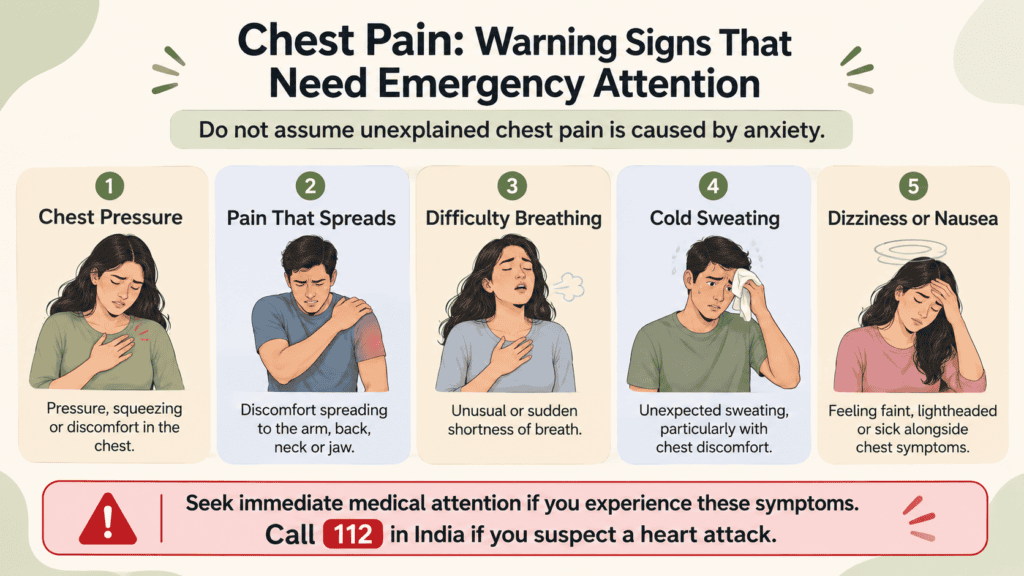
Warning signs can include:
- Pressure, squeezing or discomfort in the chest
- Pain spreading to one or both arms, the back, neck or jaw
- Shortness of breath
- Cold sweating
- Nausea or vomiting
- Lightheadedness or unusual weakness
Symptoms do not always look dramatic. Some heart attacks begin with mild discomfort rather than severe pain. Women may also experience symptoms such as unusual tiredness, nausea, breathlessness or discomfort in the back or shoulder.
This is why it is important not to dismiss unfamiliar symptoms, even if they do not match what you expect a heart attack to feel like.
Can a Panic Attack Cause Chest Pain and a Racing Heart?
Yes. During a panic attack, the body’s fight or flight response becomes activated.
Stress hormones prepare the body to respond to a perceived threat. The heart may beat faster, breathing may become rapid and muscles may tense. These changes can contribute to chest discomfort, breathlessness, dizziness and trembling.
Rapid breathing can also affect carbon dioxide levels in the blood, sometimes contributing to tingling sensations or lightheadedness.
The experience can feel extremely physical because it is. But similar symptoms can occur with medical conditions, including heart problems. Chest pain should never automatically be attributed to anxiety.
Can You Tell a Panic Attack From a Heart Attack at Home?
No reliable home test can rule out a heart problem based on symptoms alone.
Even if you have experienced panic attacks before, a new episode of chest pain deserves attention. A familiar feeling does not guarantee that the cause is the same.
Doctors may assess your symptoms, medical history and vital signs. Depending on the situation, they may recommend an electrocardiogram (ECG), blood tests or other investigations to evaluate your heart.
The priority is to rule out urgent physical causes before concluding that symptoms are related to panic or anxiety.
When Should You Seek Emergency Medical Help?
Seek immediate medical attention if you experience:
- New, unexplained or persistent chest pain or pressure
- Chest discomfort spreading to your arm, jaw, neck or back
- Chest pain accompanied by sweating, nausea or breathlessness
- Sudden severe difficulty breathing
- Fainting or feeling as though you may lose consciousness
Call 112 in India if you suspect a heart attack. Avoid driving yourself to the hospital.
When chest symptoms are new or concerning, getting checked is safer than trying to decide whether they are caused by anxiety.
What Happens After a Heart Related Cause Has Been Assessed?
If medical assessment does not identify an urgent heart problem, recurring symptoms may need further evaluation.
A healthcare professional may explore whether panic attacks, anxiety or another condition could explain what you are experiencing. They may ask when the episodes happen, how long they last, whether there are triggers and how they affect everyday life.
Repeated panic attacks can sometimes develop into panic disorder, particularly when a person becomes persistently worried about having another attack or starts avoiding situations because of that fear.
Understanding the pattern can help guide appropriate treatment.
How Are Panic Attacks and Panic Disorder Treated?
Panic attacks and panic disorder are treatable.
Cognitive behavioural therapy (CBT) is an evidence based psychological treatment that can help people recognise patterns of anxious thinking and respond differently to physical sensations and fear.
Medication may also be considered depending on the individual’s symptoms, history and treatment needs.
Learning how to recognise early signs, manage breathing and respond to anxious thoughts may also help. However, these strategies should not replace medical assessment when chest pain or other concerning symptoms occur.
Frequently Asked Questions
Can anxiety cause chest pain?
Yes. Anxiety can cause chest tightness, muscle tension and changes in breathing that contribute to chest discomfort. However, new or unexplained chest pain should be medically assessed.
Can a panic attack feel like a heart attack?
Yes. Both can involve chest discomfort, a racing heartbeat, breathlessness and dizziness. Their symptoms overlap, so you should not rely on how the episode feels to rule out a heart problem.
How long can a panic attack last?
Many panic attacks reach their peak within minutes and last around 5 to 20 minutes. The duration varies between individuals.
Should I see a psychiatrist for repeated panic attacks?
If medical causes have been appropriately assessed and panic symptoms keep returning, a psychiatrist or other qualified mental health professional can help evaluate the symptoms and discuss treatment options.
When is chest pain an emergency?
Chest pain needs urgent assessment when it is new, severe, unexplained or accompanied by breathlessness, sweating, faintness, nausea or pain spreading to other parts of the upper body. Call 112 in India if you suspect a heart attack.
Understanding the Symptoms Without Ignoring Them
Experiencing chest pain or a racing heart can be frightening, particularly when you do not know what is causing it. Panic attacks can produce intense physical symptoms, but assuming that chest discomfort is anxiety can be dangerous.
HappyMindz Clinic in Rohini, Delhi, provides psychiatric care for concerns involving anxiety, panic symptoms and emotional wellbeing. Understanding recurring symptoms begins with an appropriate assessment, including medical evaluation when needed.
If you are experiencing unexplained chest pain right now, prioritise emergency medical care rather than trying to identify the cause yourself.
